Why Dietary Magnesium Matters
Unlike some nutrients that the body can synthesise in meaningful quantities, magnesium must come almost entirely from food and water. The recommended dietary allowance (RDA) for adults sits at roughly 310 to 420 mg per day depending on age and sex, according to the National Institutes of Health Office of Dietary Supplements.[1] Because magnesium is stored in bone and soft tissue rather than circulating freely in blood, a deficiency can develop quietly over months or years before obvious symptoms appear.
For a broader look at what magnesium does once it is inside the body, see our overview at magnesium benefits and science.
Top Foods High in Magnesium
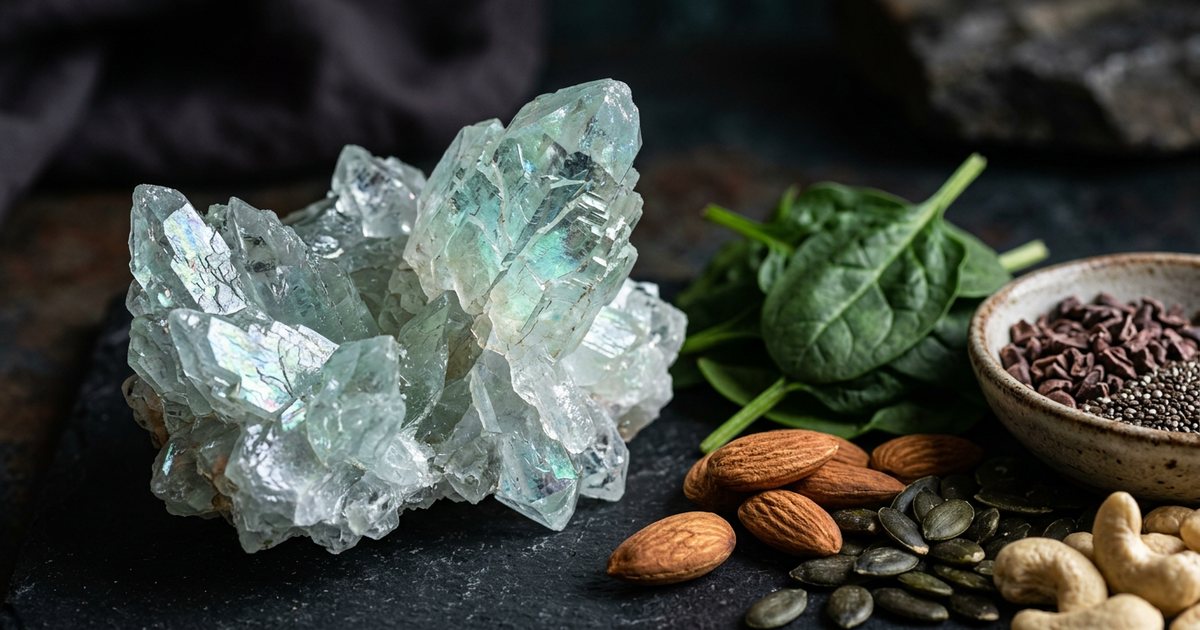
Magnesium is found in a wide range of whole, minimally processed foods. The mineral is a core component of chlorophyll, which means dark green plants are reliably strong sources. Whole grains, legumes, nuts, and seeds also concentrate magnesium in their outer layers and germ, which is why refining or milling dramatically reduces content.
Dark Leafy Greens
Spinach is the standout in this category. A cooked, 180 g serving provides around 157 mg of magnesium, making it one of the most concentrated vegetable sources available.[1] Swiss chard and cooked edamame are close behind. Raw greens deliver less per serving simply because cooking concentrates nutrients by reducing volume, so lightly steaming or sauteing is a practical way to eat more without consuming enormous portions.
Nuts and Seeds
Pumpkin seeds (pepitas) consistently rank among the very highest food sources per gram. A 28 g (one-ounce) serving of dry-roasted pumpkin seeds provides roughly 150 mg.[1] Chia seeds, hemp seeds, flaxseeds, and almonds are also excellent choices. Brazil nuts, cashews, and pine nuts contribute meaningful amounts as well. Because nuts are calorie-dense, a small daily handful is a realistic and sustainable habit rather than eating large quantities.
Whole Grains
Refined grains lose the majority of their magnesium during processing because the mineral is concentrated in the bran and germ. Whole grain options that perform well include:
- Buckwheat – technically a seed, but used as a grain; notably high in magnesium
- Quinoa – a complete protein source that also contributes around 118 mg per cooked cup[2]
- Brown rice – a modest but consistent contributor when eaten regularly
- Oats – rolled or steel-cut oats provide a useful amount, particularly when combined with toppings like seeds or nut butter
- Whole wheat bread and pasta – substantially higher in magnesium than their white flour equivalents
Legumes
Beans, lentils, and peas are affordable, versatile sources of magnesium that also provide fibre, plant protein, and other micronutrients. Black beans are the strongest of the three, supplying about 60 mg per cooked half-cup and therefore roughly 120 mg per full cup, while cooked kidney beans and chickpeas land nearer 75 to 80 mg per cup.[1][2] Soybeans and tofu are higher still. Because legumes are also high in phytates, which can reduce magnesium absorption, soaking dried beans before cooking and discarding the soaking water is a simple step that improves the mineral’s bioavailability.

Fatty Fish and Seafood
Salmon, mackerel, halibut, and tuna all provide moderate amounts of magnesium alongside omega-3 fatty acids. Mackerel in particular is frequently cited as one of the better fish sources. While seafood is not the highest-ranking category for magnesium content, it contributes meaningfully within a balanced diet.
Dark Chocolate and Cocoa
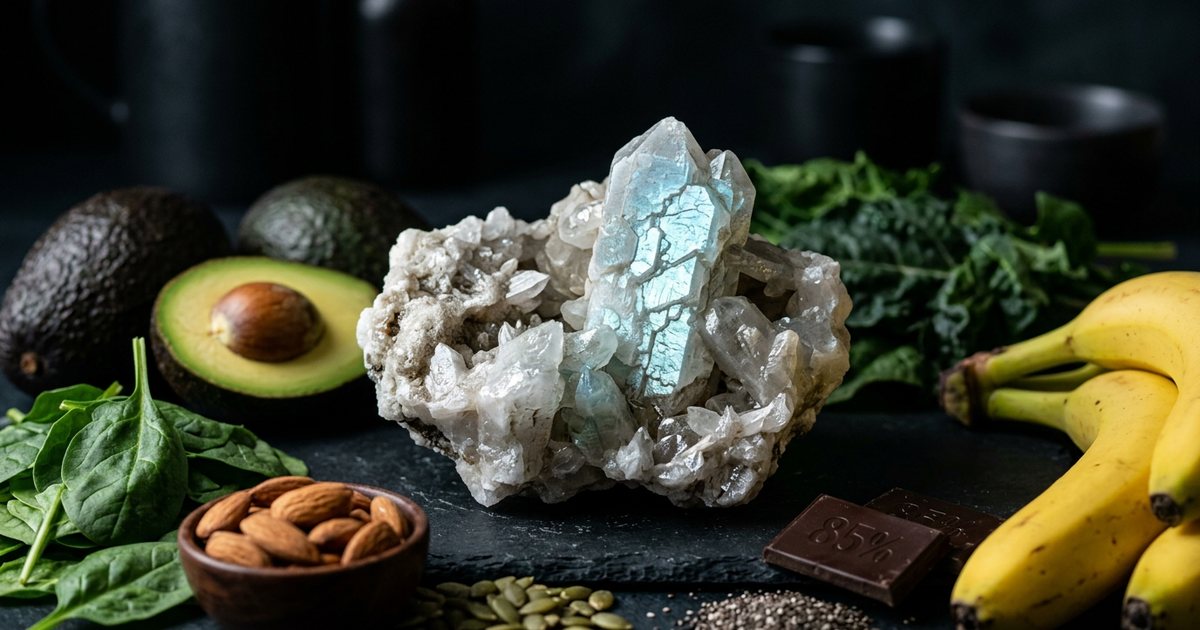
Dark chocolate with a cocoa content of 70% or above contains a surprisingly useful amount of magnesium, approximately 64 mg in a 28 g serving.[2] Unsweetened cocoa powder is even more concentrated. This makes a small portion of high-quality dark chocolate or a cocoa-based smoothie an enjoyable and evidence-backed addition to a magnesium-focused diet.
Avocado
One medium avocado contributes around 58 mg of magnesium alongside potassium, healthy fats, and fibre.[2] Its bioavailability is good because the fat content may assist absorption of fat-soluble compounds consumed at the same meal.

Magnesium Food Sources at a Glance
| Food | Serving Size | Approximate Magnesium (mg) |
|---|---|---|
| Pumpkin seeds, dry roasted | 28 g (1 oz) | ~150 |
| Cooked spinach | 180 g (1 cup) | ~157 |
| Cooked black beans | 172 g (1 cup) | ~120 |
| Cooked quinoa | 185 g (1 cup) | ~118 |
| Almonds | 28 g (1 oz) | ~80 |
| Dark chocolate (70-85% cocoa) | 28 g (1 oz) | ~64 |
| Avocado, whole | ~200 g | ~58 |
| Cooked brown rice | 195 g (1 cup) | ~84 |
| Canned salmon | 85 g (3 oz) | ~26 |
Serving values are drawn from NIH Office of Dietary Supplements Table 2 and USDA FoodData Central; figures given per cup are scaled from the published per-100 g or per-half-cup entries.[1][2]
Values are approximate and sourced from USDA FoodData Central. Actual content varies by growing conditions, preparation method, and brand.
Herbs and Dietary Factors That Support Magnesium Status
Several culinary herbs and spices contain concentrated magnesium on a per-gram basis, though because they are consumed in small quantities their practical contribution is limited. Dried coriander, dried chives, spearmint, and basil are among the higher-ranking herbs by weight. Using these liberally as seasonings adds small but cumulative amounts over time.

On the other hand, certain dietary habits can deplete or block magnesium absorption. High alcohol intake increases urinary magnesium excretion significantly. Diets very high in refined sugar may also increase losses. Calcium supplements taken in large doses without adequate magnesium can create a competitive imbalance. Conversely, vitamin D sufficiency supports magnesium absorption in the gut, making these two nutrients worth considering together.
Who May Struggle to Get Enough From Diet Alone
Even with a well-balanced diet, some groups consistently have difficulty meeting magnesium needs through food alone:
- Older adults – both intestinal absorption decreases and urinary excretion increases with age, raising requirements at the same time as dietary variety often narrows
- People with type 2 diabetes – elevated blood glucose increases renal magnesium losses
- Those with gastrointestinal conditions – Crohn’s disease, coeliac disease, and chronic diarrhoea all impair absorption from the gut
- People taking certain medications – proton pump inhibitors, diuretics, and some antibiotics are associated with reduced magnesium status
- Those eating heavily processed diets – a diet centred on refined grains, fast food, and few vegetables will almost invariably fall short
- Athletes and people with high sweat losses – magnesium is lost in sweat, meaning physically active individuals may have higher requirements
How Dietary Sources Compare to Supplements
Food sources of magnesium come packaged with fibre, phytonutrients, co-factors, and synergistic minerals that supplements cannot fully replicate. Absorption from food is generally well regulated by the gut, reducing the risk of taking in too much at once. The tolerable upper intake level for supplemental magnesium in adults is 350 mg per day from supplements specifically, while food-based magnesium carries no established upper limit because the intestine self-regulates absorption efficiently.
That said, supplements are a practical and evidence-supported option when diet consistently falls short. Different forms of supplemental magnesium, such as glycinate, citrate, or malate, vary in bioavailability and tolerance. For a detailed comparison of supplement forms, visit our guide at magnesium supplement types and absorption. If you are considering adding a supplement, a conversation with a healthcare provider is sensible, particularly if you have kidney disease or take prescription medications.
A realistic strategy for most people is to improve dietary intake first, using whole foods high in magnesium as the foundation, and to consider supplementation as a targeted tool rather than a first resort. You can also explore how magnesium interacts with other nutrients in our article at magnesium and nutrient interactions.


Frequently Asked Questions
What are the best everyday foods high in magnesium for someone who dislikes leafy greens?
Nuts and seeds are among the most concentrated and convenient options. A small handful of pumpkin seeds, almonds, or cashews each day, combined with cooked oats for breakfast and a portion of beans or lentils at lunch or dinner, can get many adults close to their daily target without a single leafy green in sight. Dark chocolate and avocado are further enjoyable additions.
Does cooking destroy magnesium in vegetables?
Boiling vegetables in large amounts of water and discarding the liquid does result in meaningful magnesium losses, as the mineral leaches into the water. Steaming, stir-frying, or eating vegetables raw preserves more magnesium. Interestingly, cooking also reduces volume, so a cup of cooked spinach contains more magnesium than a cup of raw spinach simply because it represents a greater amount of actual plant material.
Can drinking water contribute to magnesium intake?
Yes, particularly in areas with hard water. Hard tap water and some mineral waters contain meaningful amounts of magnesium, occasionally contributing 10 to 30 percent of daily needs depending on the local water supply. If you regularly drink mineral water, check the label for magnesium content, as levels vary enormously between brands and sources.
Is it possible to get too much magnesium from food?
Toxicity from food sources alone is extremely rare in people with healthy kidneys, because the gut down-regulates absorption when intake is high and the kidneys excrete excess efficiently. The upper intake limit of 350 mg per day applies specifically to supplemental magnesium, not to food. Consuming large quantities of magnesium-containing laxatives or antacids is where excessive intake becomes a realistic concern.
How long does it take to improve magnesium levels through diet?
This varies considerably depending on the starting point and how consistently the dietary changes are maintained. Because most magnesium is stored in bone and soft tissue rather than blood, changes in status are gradual. Consistent dietary improvement over several weeks to months is typically needed before meaningful changes in tissue stores occur. Blood serum levels are a poor short-term indicator for this reason, and this is worth discussing with a clinician if you suspect a deficiency.
References
- Office of Dietary Supplements, National Institutes of Health. Magnesium: Fact Sheet for Health Professionals (Table 1, Recommended Dietary Allowances; Table 2, Magnesium Content of Selected Foods). ods.od.nih.gov
- U.S. Department of Agriculture, Agricultural Research Service. FoodData Central, SR Legacy food composition data. fdc.nal.usda.gov
These statements have not been evaluated by the Food and Drug Administration. This information is not intended to diagnose, treat, cure, or prevent any disease. Content is for informational purposes only and is not medical advice; consult a qualified healthcare provider before starting any supplement. As an Amazon Associate we earn from qualifying purchases.
